Building an AI-Assisted Export Management Workflow
Artificial intelligence is transforming export management by helping companies work faster, make smarter decisions, and reduce repetitive tasks. While AI cannot replace experienced trade professionals, it has become a valuable assistant throughout the export process.
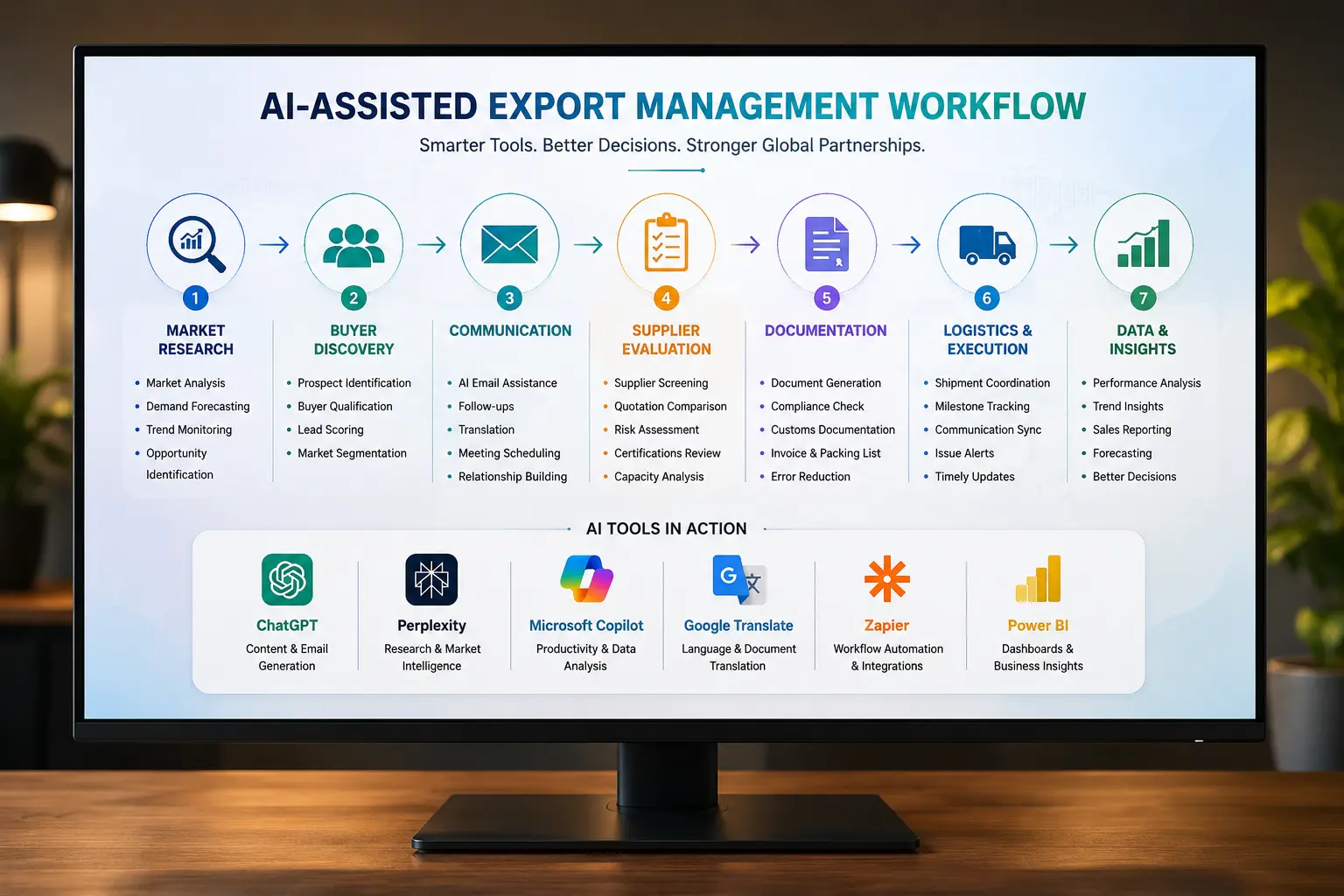
Artificial intelligence is transforming export management by helping companies work faster, make smarter decisions, and reduce repetitive tasks. While AI cannot replace experienced trade professionals, it has become a valuable assistant throughout the export process. An AI-assisted workflow begins with market research. AI tools can analyze global demand, identify promising markets, monitor competitors, and track changes in trade regulations, helping export managers focus on the best business opportunities. Finding international buyers is also more efficient with AI-powered prospecting platforms. These tools help identify qualified importers based on industry, company size, location, and purchasing activity, saving hours of manual research.
Communication becomes easier as AI assists in drafting professional emails, follow-ups, meeting requests, and product introductions. Translation tools also help businesses communicate accurately with partners across different languages and markets.AI can support supplier evaluation by organizing supplier information, comparing quotations, reviewing certifications, and highlighting potential risks. It also simplifies document preparation by assisting with commercial invoices, packing lists, and export documentation while reducing administrative work.
Finally, AI-powered analytics help export managers monitor sales performance, customer inquiries, pricing trends, and shipment progress. These insights enable better planning and faster decision-making.
A successful export management workflow combines AI with human expertise. While technology improves efficiency, experienced professionals remain essential for supplier verification, negotiations, relationship building, and strategic decisions. Companies that embrace AI as a business assistant—not a replacement for people—will be better equipped to compete in today's fast-changing global marketplace.